Every dam protects an area a thousand times larger than its reservoir from flooding
The stereotype that people are powerless in the face of the elements is in practice disproved by the purpose of dams: during floods they accumulate surplus water resources in a reservoir, and in the relatively dry season that resource can be used both to generate electricity and to feed irrigation and drinking water networks.
The stereotype that people are powerless in the face of the elements is in practice disproved by the purpose of dams: during floods they accumulate surplus water resources in a reservoir, and in the relatively dry season that resource can be used both to generate electricity and to feed irrigation and drinking water networks.
Among the natural disasters typical of the Samegrelo region, floods attract particular attention. This dangerous natural phenomenon is caused not only by torrential rain and the intensive melting of snow cover, but also by the sudden release of temporary bodies of water that form above sections blocked by landslides, rockfalls and avalanches.
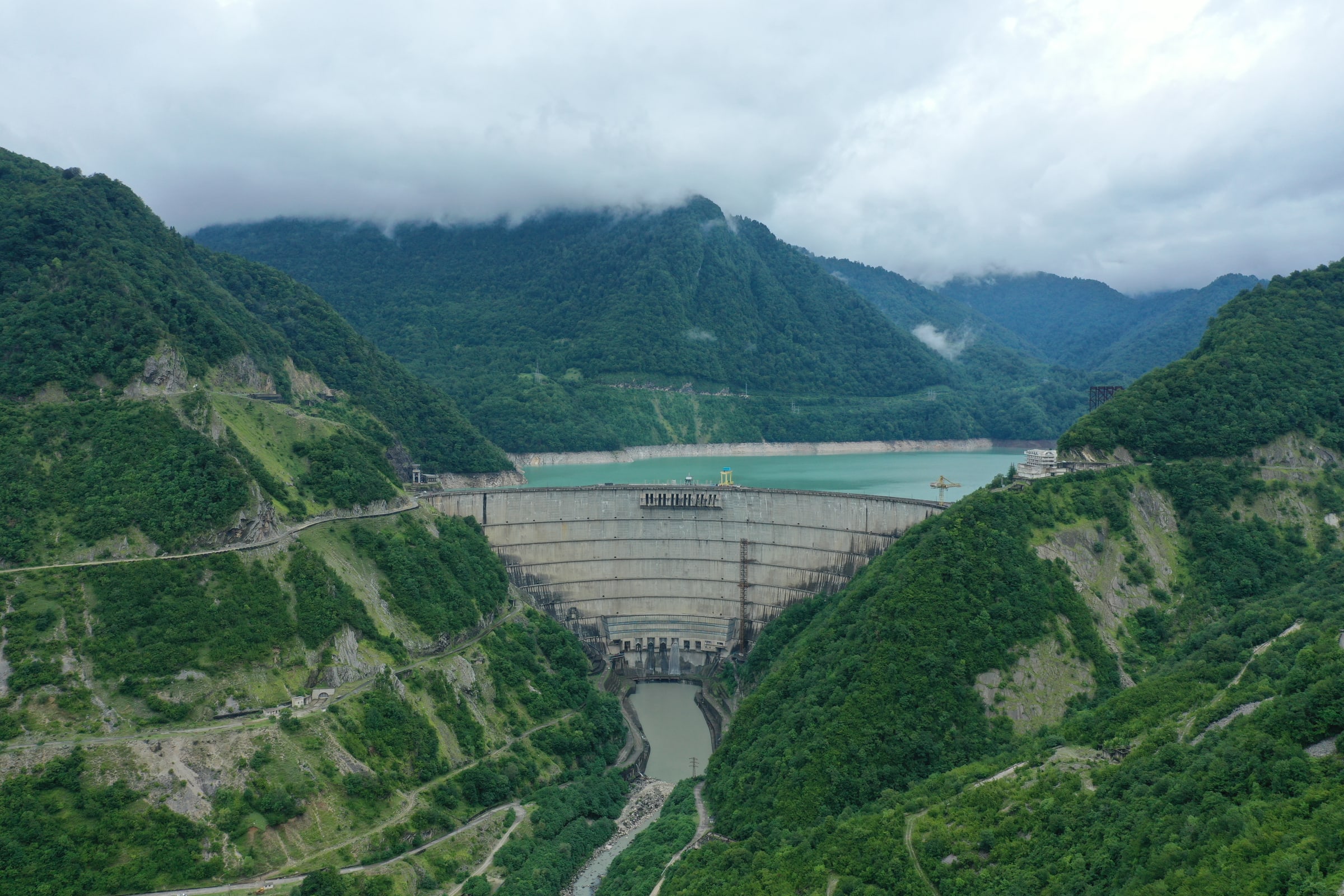
The people of Samegrelo have suffered the effects of flooding since time immemorial. But since the Enguri HPP dam was built, no destructive floods have been recorded in the Enguri valley between the dam and the delta. Besides generating electricity, the Enguri HPP reservoir, with a volume of 110 million cubic metres, also accumulates the river’s flood flows and protects the population from inundation.
After the Tbilisi flood of 13 June, which claimed 23 lives, geologists began talking about the need to build a dam on the river Vere to prevent a similar disaster. The landslide zone that caused that flood is still active today.
The stereotype that people are powerless in the face of the elements is in practice disproved by the purpose of dams: during floods they accumulate surplus water resources in a reservoir, and in the relatively dry season that resource can be used both to generate electricity and to feed irrigation and drinking water networks.
Among the natural disasters typical of the Samegrelo region, floods attract particular attention. This dangerous natural phenomenon is caused not only by torrential rain and the intensive melting of snow cover, but also by the sudden release of temporary bodies of water that form above sections blocked by landslides, rockfalls and avalanches.
The people of Samegrelo have suffered the effects of flooding since time immemorial. But since the Enguri HPP dam was built, no destructive floods have been recorded in the Enguri valley between the dam and the delta. Besides generating electricity, the Enguri HPP reservoir, with a volume of 110 million cubic metres, also accumulates the river’s flood flows and protects the population from inundation.
Valeri, a resident of the village of Rukhi who is approaching 70, tells us what things were like before the unique Enguri dam was built and what the situation is with flooding in the Enguri valley today.
“I was small back then; I am turning 70 now, and I have seen with my own eyes that there were floods often, two or three times a year. The Enguri would burst its banks, flow into the fields, and people suffered losses. A great deal of water would come down; at the Rukhi bridge the river split in two — a little less on our side, and more towards Chuburkhinji, on the Abkhazia side. It would carry away the land along the riverbed and spill into the fields. When the snow began to melt, in spring, and then with the summer rains, it all built up. It would even carry off the ferry, our crossing to the fields, and take it out to sea. It flooded the maize fields, the plots, the vegetable gardens. It brought down logs from Svaneti, rafts; the river was completely covered — they cut timber and took it to the paper mill and turned it into paper. Then the widened bed would narrow again and the water would run clear once more,” the Rukhi resident recalls.
“Now, since the plant was built, there are no floods. Since the plant I have neither seen nor heard of a flood on the Enguri. These lands used to belong to the collective farm, then they were given to the people and the people worked them. After the plant was built, the area and the amount of land increased. It is good soil for crops — for beans, for maize — and people used it actively, all the more so as the population and the arable area both grew,” 70-year-old Valeri tells us.
Read more